
Blog
Football Is a Universal Language: How the Game Connects Cultures, Markets & Communities
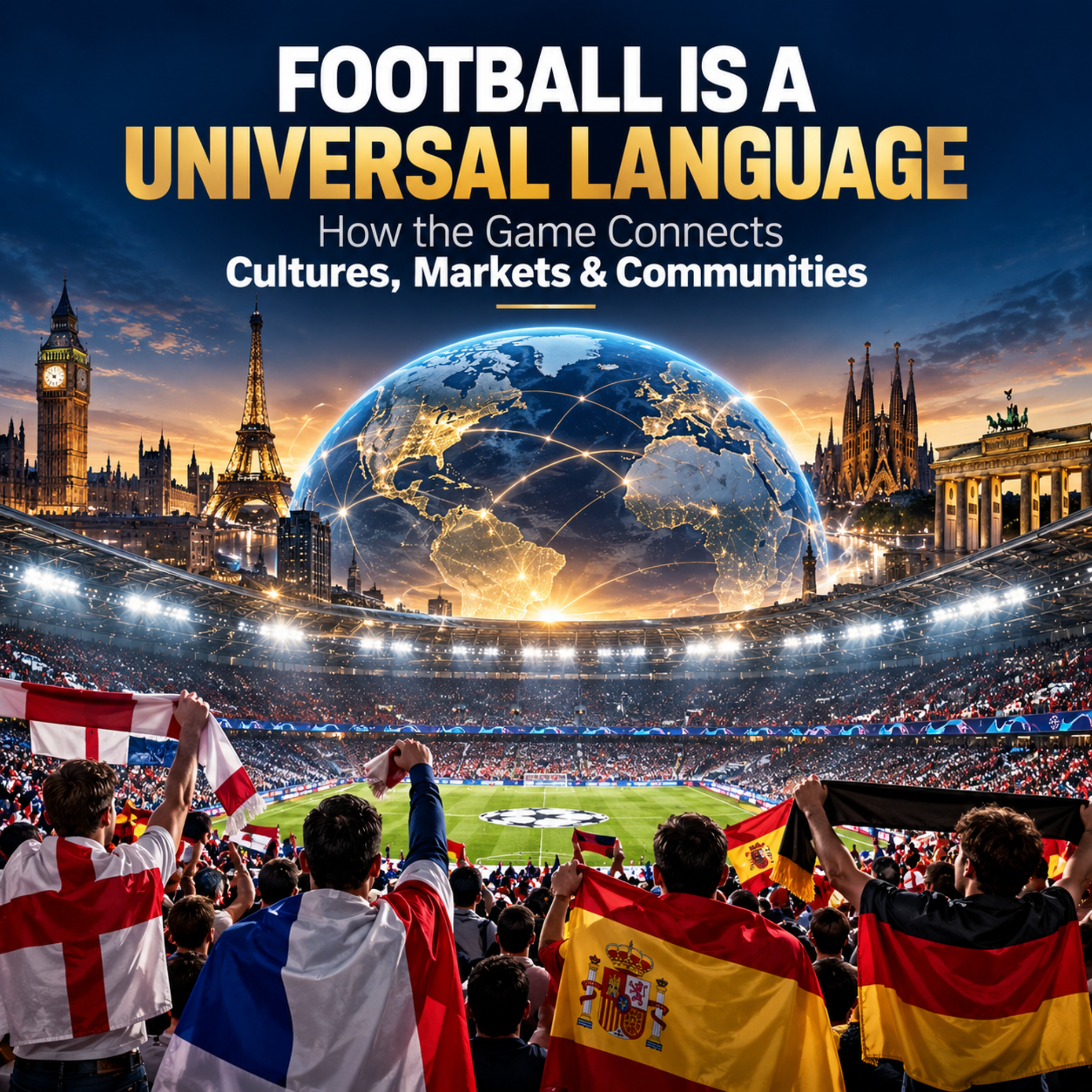
Ask someone why they love football and you will probably get a different answer every time.
For one person, it may be the club they grew up supporting. For another, it may be playing football with friends after school. Someone else may remember watching a World Cup match with their family or travelling to another country to see their favourite team.
The reasons are different, but the feeling is often the same.
That is what makes football unusual. You do not always need to speak the same language to understand what is happening when a stadium erupts after a goal. You do not need the same background to appreciate a great performance. And you certainly do not need to live in the same country to feel connected to a club or player.
Football has become much more than a sport played between two teams. It is part of popular culture, community life and an increasingly international business ecosystem.
Football Brings Different Cultures Together
Football reflects the places where it is played.
The way supporters celebrate, the traditions surrounding clubs, the atmosphere inside stadiums and even the way young players learn the game can vary from one country to another.
European football has its own deep club traditions and historic rivalries. South American football is closely linked with local identity and passionate supporter culture. Across Asia, Africa and the Middle East, the game has developed its own communities while remaining closely connected to the international football world.
These differences are not a barrier.
In many cases, they are exactly what makes football interesting.
A supporter in the UAE can follow a club in England. A young player in Africa can dream of building a career in Europe. A football organisation in the Middle East can work with international partners. Fans from completely different countries can discuss the same match online within minutes of the final whistle.
The sport gives people something familiar to talk about, even when almost everything else about their lives may be different.
The Football Community Is No Longer Limited to the Stadium
For a long time, being part of a football community mainly meant living near a club, attending matches or playing locally.
That has changed.
Social media, streaming platforms and digital communities have made football much more accessible. A fan can now follow a club every day, watch interviews with players, comment on matches and interact with other supporters without ever visiting the club's home city.
This has changed the relationship between football organisations and their audiences.
A club's community can now stretch across several countries. An athlete can build a following far beyond the league in which they play. A sports brand can communicate directly with supporters instead of relying entirely on traditional media.
For sports organisations, this creates both an opportunity and a responsibility.
Having a large audience is one thing. Building a genuine relationship with that audience is another.
Good content, consistent communication, meaningful fan experiences and a clear identity all contribute to that relationship.
Football Can Create Connections Outside the Game
The community side of football is not limited to professional competitions.
Local clubs, schools, academies and grassroots programmes introduce young people to the sport and give them a place to play, compete and interact with others.
For many children, football is where friendships begin.
They may come from different families, cultures or backgrounds, but once they are on the same pitch, the focus becomes much simpler: pass the ball, work together, defend, attack and try to score.
Those experiences can have value beyond football.
The same principle applies at a professional level. International teams bring players from different backgrounds together. Clubs operate with multinational squads. Major competitions attract supporters from around the world.
Football does not remove cultural differences.
Instead, it creates a shared environment where those differences can exist alongside a common interest.
Football Has Become a Global Business
There is another side to football that is impossible to ignore.
The modern football industry involves much more than players, coaches and matches. Around the sport is a large network of commercial and professional activities, including:
- • Sponsorship and partnerships
- • Athlete and talent management
- • Branding
- • Marketing and public relations
- • Media and digital content
- • Sports investments
- • Events and hospitality
- • Athlete healthcare
- • Fan engagement
- • Strategic consulting
This is where football's cultural influence meets the commercial world.
A club may have millions of supporters, but turning that audience into meaningful commercial relationships requires planning. An athlete may have outstanding ability, but managing contracts, branding, media exposure and sponsorship opportunities requires a different set of skills.
The same applies to businesses entering the sports market.
Having an interest in football is not enough to build a successful sports partnership.
The sporting side and the business side have to work together.
Sponsorship Is About More Than Putting a Logo on a Shirt
Sports sponsorship has changed significantly.
A brand partnership can involve far more than placing a logo on a jersey or advertising board. Depending on the objectives, it may include digital content, athlete collaborations, fan activations, hospitality, community programmes, events and social media campaigns.
The most useful partnerships usually begin with a simple question:
Why does this partnership make sense for both sides?
A technology company may want to connect with a digitally active audience. A financial brand may be interested in international business communities. A consumer company may want to build stronger relationships with supporters.
There is no single formula.
That is why sports sponsorship needs more than visibility. It needs strategy.
Talent Is at the Centre of the Football Ecosystem
Football may be driven by clubs and competitions, but players remain at the heart of the sport.
For an athlete, building a career today involves considerably more than performing well during matches.
There are contracts to consider. Transfers can shape careers. Sponsorships can create commercial opportunities. Media appearances can influence public perception. Personal branding can affect how an athlete is viewed outside the pitch.
Then there is the question of what happens after playing professionally.
A well-managed career therefore requires a broader view.
Talent management can bring different parts of an athlete's professional life together, from career planning and commercial opportunities to media support and long-term development.
For SHM, talent is one part of a wider sports-management model. Its services include talent development, career management, contract support, media and PR, brand alignment and planning for life beyond professional sport.
The idea is straightforward: an athlete's career should not be treated as only what happens on matchday.
A Strong Football Brand Starts With a Clear Identity
Football is emotional, and brands operating in football need to understand that.
People do not support a club simply because of its logo. They connect with its history, personality, players, values, memories and community.
The same applies to athletes.
An athlete's public identity is shaped by performance, personality, communication, achievements and the way they interact with fans.
That is why sports branding requires more thought than visual design alone.
A strong sports brand should answer basic questions:
- • What does the athlete or organisation stand for?
- • Who is the audience?
- • What makes the identity different?
- • How should that story be communicated?
- • Which partnerships make sense for the brand?
Once those questions are clear, visual identity, content, sponsorship and communication can work together rather than operating separately.
This is particularly important when a sports organisation wants to enter new markets.
Why the UAE Matters in the International Sports Landscape
The UAE occupies an interesting position in global sport.
Its location connects markets across the Middle East, Europe, Asia and Africa. The country also has a strong international business environment and an established interest in major sporting events and investment.
For the sports industry, this creates opportunities beyond hosting competitions.
There is growing space for partnerships involving athletes, brands, sports organisations, investors, media, events, infrastructure and commercial services.
That environment also creates a need for organisations that understand both sides of the sports industry.
Football is emotional and community-driven.
At the same time, the business surrounding football requires commercial planning, financial understanding, strategic advice and professional execution.
Bringing these perspectives together can make it easier for organisations to approach international opportunities with a clearer structure.
Where SHM Fits Into This Ecosystem
SHM's services reflect the fact that modern sports projects rarely fit into one category.
An athlete may need talent management and healthcare while also building a personal brand and developing sponsorship relationships.
A sports organisation may need consulting, marketing, investment support and commercial partnerships at different stages of its development.
A brand entering football may need help understanding the right property, audience and sponsorship structure.
SHM works across these areas through:
Branding
Helping athletes, teams and sports organisations build clear identities and communicate their stories.
Talent
Supporting athletes with career management, development, commercial opportunities and professional planning.
Investments
Supporting sports-related opportunities across areas such as operations, digital and media, commercial partnerships, events, performance and advisory work.
Consultations
Helping sports organisations and stakeholders evaluate challenges, opportunities and strategic decisions.
Athletes Health Care
Supporting areas such as healthcare, injury prevention, rehabilitation and athlete performance.
Marketing & PR
Using storytelling, digital marketing, media relations and fan engagement to strengthen communication.
Sports Sponsorship
Connecting brands and sports properties through partnerships that are aligned with commercial objectives.
The value of this approach is that these services can work together.
A sponsorship may influence branding. Branding can influence marketing. Talent can create new commercial opportunities. Investment decisions may require consultation.
The sports industry is interconnected, and the strategy around it needs to reflect that.
Football Connects Markets as Well as People
The international nature of football has created a bridge between different commercial markets.
A European football organisation can have an audience in the Middle East. A UAE-based business can explore partnerships with international sports properties. An athlete can build a global profile while playing in one country.
These relationships can create opportunities, but they also require an understanding of local audiences.
A strategy that works in one market may not automatically work in another.
Culture, consumer behaviour, media habits, sponsorship expectations and business relationships can all differ.
Successful international sports partnerships therefore depend on understanding both sides.
The objective should not simply be to enter another market.
It should be to build a relationship that makes sense there.
The Future of Football Will Be Built Around Connection
Football will continue to change.
Digital media will influence how supporters consume matches. Athletes will have greater control over their personal brands. Sports organisations will look for new revenue streams. Businesses will continue to explore the value of sports partnerships.
Technology will play a bigger role as well.
But one thing is unlikely to change.
People will still care about the game because of how it makes them feel.
A child playing football in a neighbourhood. A family watching a match together. Supporters travelling for a European fixture. An athlete representing their country. Fans from different continents celebrating the same goal.
These moments are why football continues to cross borders.
The business around the sport may become more sophisticated, but the foundation remains human.
Football Is More Than What Happens on the Pitch
Calling football a universal language is not just a phrase.
The sport has created a global network where cultures meet, communities form, athletes build careers and businesses find new audiences.
Its influence reaches from grassroots pitches to major stadiums, from local supporter groups to international markets.
For athletes, that can mean new career possibilities.
For brands, it can mean meaningful access to passionate audiences.
For sports organisations, it can mean international partnerships and commercial opportunities.
And for communities, it can simply mean having something that brings people together.
That is the real strength of football.
It does not require everyone to be the same.
It gives different people a reason to connect.
For a sports-management company such as SHM, that connection sits at the centre of the wider opportunity — bringing together talent, brands, organisations, investors and communities through a more connected approach to sport.
Frequently Asked Questions
Football is often called a universal language because people from different countries and cultural backgrounds can understand and enjoy the basic experience of the game. Shared emotions, competition, team loyalty and fan culture can create connections even when people do not speak the same language.
Football creates cultural connections through international competitions, clubs, players, supporters, academies and digital communities. People can follow teams from other countries, interact with international fans and experience different football traditions while sharing the same interest in the sport.
Football supports a broad commercial ecosystem involving sponsorships, media, marketing, events, investments, hospitality, athlete services and fan engagement. Its international audience gives businesses opportunities to build relationships with specific communities and markets.
Branding helps communicate what an athlete, team or sports organisation represents. A clear identity can support communication with fans, media and commercial partners while creating consistency across digital platforms, campaigns and sponsorship activities.
SHM provides services covering Branding, Talent, Investments, Consultations, Athletes Health Care, Marketing & PR and Sports Sponsorship. These services can support different requirements across athlete careers, sports organisations, commercial partnerships and sports-related business opportunities.