
Blog
Football Without Borders: The Growing Global Business of the Beautiful Game
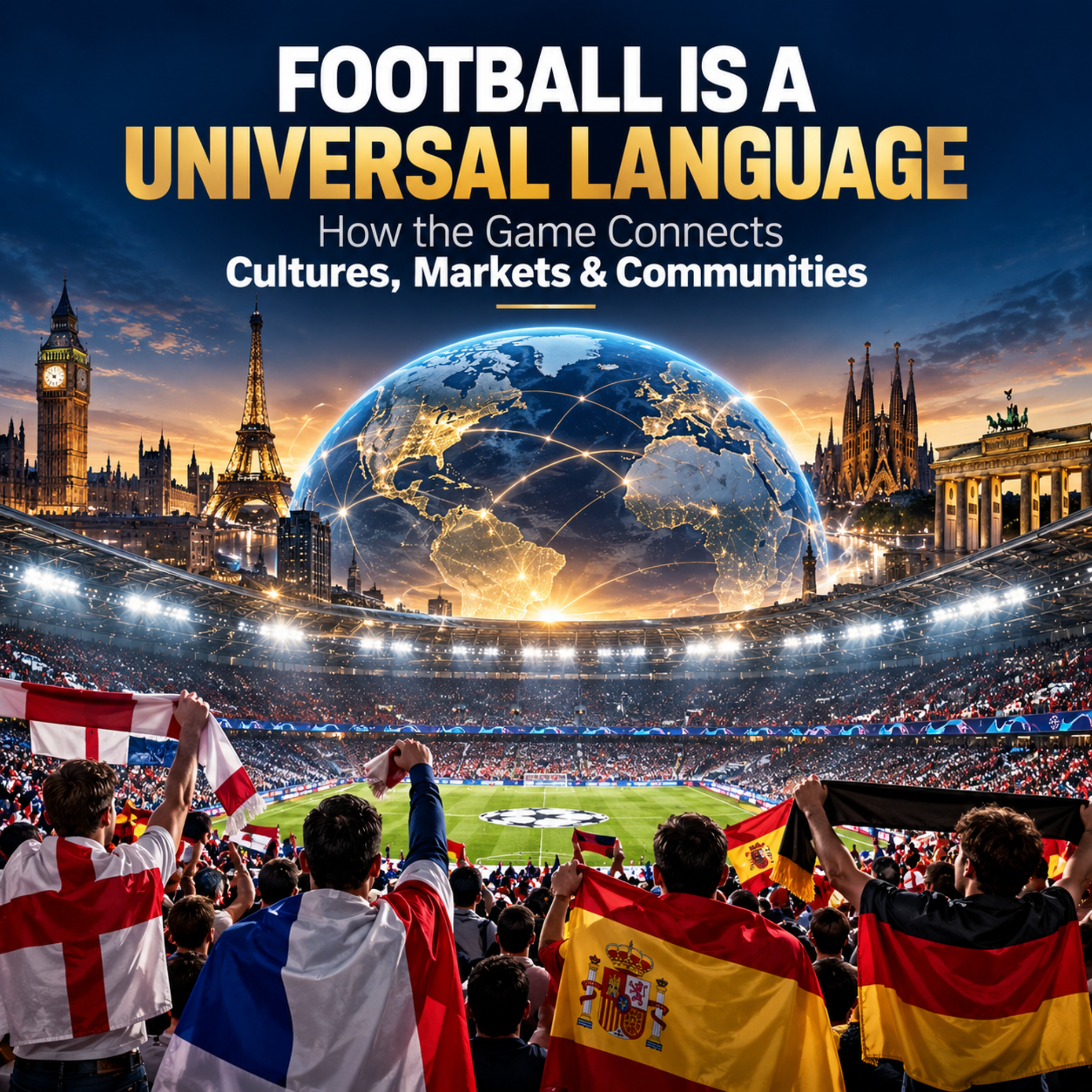
Football has always travelled well.
A club can have its roots in one city and supporters on almost every continent. A player can begin their career in one country, move to another league and build a following across several markets. A sponsor based in the Middle East can work with a European football property and reach audiences far beyond its own region.
That is the reality of modern football.
The game still belongs to its local communities, but the business around it has become international. Broadcasting, sponsorship, digital media, talent management, investment, branding and sports technology have all changed the way football creates value.
The result is an industry where opportunities can cross borders even when the match itself is being played in one stadium.
Football Has Become a Global Industry
Not long ago, the commercial life of a football club was closely tied to its home market.
Local supporters bought tickets and merchandise. Regional businesses provided sponsorship. Television coverage brought matches to a wider audience.
Today, the picture is very different.
A supporter in Dubai can follow a club in London every week. A teenager in Asia can build a strong connection with a Spanish club without ever visiting Spain. An athlete can work with brands from several countries while playing in a completely different market.
Digital media has played a major role in this change.
Clubs and athletes can now communicate directly with supporters through social platforms, video content, podcasts, streaming services and other digital channels. Geography still matters, but it is no longer the boundary it once was.
That has opened the door to a much wider football economy.
What Actually Makes Up the Football Business?
When people hear “football business”, they often think about club owners, transfer fees and sponsorship deals.
Those are certainly important, but they represent only part of the picture.
The wider industry includes:
- • Broadcasting and streaming
- • Sponsorship and commercial partnerships
- • Player and talent management
- • Club operations
- • Sports investments
- • Branding and marketing
- • Digital media and content
- • Stadiums and hospitality
- • Sports technology
- • Athlete healthcare and performance
- • Events and tourism
- • Merchandise and licensing
- • Strategic consulting
These areas rarely operate independently.
A successful player can increase a club's commercial appeal. A strong club identity can attract sponsors. A sponsorship campaign can create digital content. Digital engagement can strengthen a club's international fan base.
One part of the industry often creates value for another.
That interconnected nature is one of the main reasons football has become such a significant global business.
International Fans Are Changing the Commercial Picture
A football club no longer has to rely only on people who live close to its stadium.
International supporters can become deeply invested in a club's identity. They follow matches, watch interviews, purchase merchandise, interact with players and participate in online communities.
For clubs, this creates a valuable international audience.
But reaching that audience is only the beginning.
A supporter in the UAE may have different expectations from a supporter living near a club's home ground. The same applies to fans in Asia, North America or Africa.
Successful international growth therefore requires more than opening a social media account for a new market.
It requires an understanding of the audience.
What interests them? Which players do they follow? What type of content do they respond to? What local partnerships make sense?
These questions are becoming increasingly important as football organisations build international strategies.
Digital Media Has Changed the Relationship Between Fans and Football
The match is no longer the only moment when supporters interact with a club.
A football fan can spend hours with a team without watching a full 90-minute game.
They may watch training clips, player interviews, behind-the-scenes footage, short-form videos or post-match discussions. They may follow individual players just as closely as the club itself.
This has created a much larger content economy around football.
For athletes, it provides an opportunity to build a personal identity.
For clubs, it creates more ways to keep supporters involved throughout the season.
For brands, it provides additional opportunities to become part of the conversation.
The challenge is keeping that content believable.
Football supporters are passionate audiences. They generally respond better to partnerships and campaigns that feel relevant to the sport rather than advertising that simply happens to appear beside it.
Sponsorship Is No Longer Just About Visibility
A football sponsorship used to be relatively straightforward.
A company paid for a partnership and received exposure through shirts, stadium advertising or other branding placements.
Today, commercial partnerships can be much broader.
Depending on the agreement, a sponsor may work with:
- • Players and athletes
- • Digital content
- • Social media campaigns
- • Fan activations
- • Hospitality
- • Events
- • Community programmes
- • International marketing
- • Business networking
- • Branded experiences
The important question is what happens after the logo is visible.
A strong sponsorship should have a purpose.
A company entering a new market may use football to build awareness. A technology business may create a digital experience for supporters. A financial company may use hospitality and networking opportunities to strengthen business relationships.
The football property provides the audience and credibility.
The activation gives the partnership practical value.
Global Football Still Requires Local Understanding
Football may be international, but markets are not identical.
Consumer habits, media preferences, business culture and sponsorship expectations can vary significantly between countries.
A campaign designed for a European audience may need a different approach in the Middle East. A partnership that works in one country may not produce the same response somewhere else.
This is particularly relevant for businesses looking at opportunities in the UAE.
The UAE sits between several important international markets and has strong connections with Europe, Asia, Africa and the wider Middle East. That makes the region relevant to companies and sports organisations looking to build cross-border relationships.
But international football partnerships need proper planning.
Before entering a deal, organisations need to consider the target audience, commercial rights, market objectives, brand fit and expected outcomes.
The name of a famous football club alone does not create a successful business strategy.
Football Investment Goes Beyond Buying a Club
Club ownership often gets the headlines, but investment opportunities in football extend much further.
Money is also being directed towards the infrastructure and services that support the wider sports industry.
Examples include:
- • Sports technology
- • Performance centres
- • Medical facilities
- • Rehabilitation services
- • Digital platforms
- • Media businesses
- • Stadium development
- • Sports events
- • Hospitality
- • Data and analytics
- • Athlete services
This broader view matters because football is an ecosystem.
The growth of professional sport creates demand for businesses that operate around the athlete, the club and the supporter.
For investors, that can mean looking beyond the most visible part of the industry and examining where long-term commercial demand is developing.
Talent Remains at the Heart of Football
For all the discussion around media, sponsorship and investment, football still depends on people who play the game.
Athletes are one of the most important assets in the football economy.
A player's performance can influence results, supporter interest, media attention and commercial opportunities. But managing a football career has become more complicated than simply performing on the pitch.
Contracts, transfers, media relations, sponsorships, personal branding and long-term career planning can all affect an athlete's professional journey.
This is where experienced talent management becomes useful.
SHM's talent services cover areas such as athlete development, career management, contract support, media and PR, brand alignment and sponsorship opportunities. The wider aim is to help athletes manage both their sporting careers and the professional opportunities that come with them.
That matters because a player's career can become international very quickly.
A local talent can eventually work with clubs, brands and audiences across several countries.
A Footballer's Brand Can Travel Further Than Their Club
Players today are not known only for what they do during matches.
Their personality, communication style, social presence, achievements and commercial partnerships all contribute to their public identity.
Some athletes build audiences that remain strong even after they leave a particular club.
That makes personal branding an important part of modern sports management.
For an athlete, the goal should not simply be to become visible.
The identity needs to be clear and believable.
What does the athlete represent? Which audiences are relevant? What types of partnerships make sense? How should the athlete communicate away from the pitch?
These questions become particularly important when athletes work with international brands.
The strongest partnerships tend to feel connected to the athlete rather than added on simply for exposure.
Why the UAE Is Becoming Relevant to Global Football Business
The UAE has an increasingly international role in the wider sports and business landscape.
Its location provides access to major markets across Europe, Asia, Africa and the Middle East. At the same time, the country has developed a strong environment for international business, investment and major sporting activities.
For football organisations, this creates opportunities to develop relationships with regional companies, investors and audiences.
For UAE-based businesses, international football can provide a route into global sports communities.
These relationships can take different forms:
- • Sports sponsorship
- • Club partnerships
- • Athlete collaborations
- • Corporate hospitality
- • Investment
- • Events
- • Digital campaigns
- • Brand partnerships
The opportunity is there, but it needs to be approached with a clear commercial objective.
A business should know what it wants from a football partnership before deciding which property or athlete to work with.
Where Sports Management Fits In
As football becomes more international, managing individual pieces separately becomes increasingly difficult.
An athlete may need career guidance, healthcare, branding, media support and sponsorship.
A sports organisation may need marketing, strategic consulting, investment advice and commercial partnerships.
A brand may need help identifying the right football property and building a partnership around a specific business goal.
These requirements overlap.
That is why an integrated sports-management approach can be useful.
SHM works across Branding, Talent, Investments, Consultations, Athletes Health Care, Marketing & PR and Sports Sponsorship, providing support across several sides of the modern sports ecosystem.
The connection between these services is important.
A sponsorship should fit the brand.
A marketing campaign should reflect the athlete or organisation.
Investment decisions should consider the wider sports environment.
Healthcare should support the athlete's ability to perform and sustain a career.
Looking at these areas together can create a more practical approach to sports management.
The Business of Football Is Becoming More Data-Driven
Another major change is the increasing role of technology.
Clubs and sports organisations now have access to more information about players, supporters and commercial activity than ever before.
Performance data can help teams assess athletes.
Fan data can help organisations understand audiences.
Digital analytics can show which campaigns generate engagement.
Technology is also influencing athlete healthcare, training and rehabilitation.
This does not remove the human side of football.
Instead, it gives clubs, athletes and businesses more information to make decisions.
The organisations that use technology effectively will still need people who understand the context behind the numbers.
Data can show what happened.
Strategy helps determine what to do next.
What Comes Next for the Global Football Industry?
Football's international expansion is unlikely to slow down.
Clubs will continue building audiences outside their traditional markets. Athletes will continue developing international personal brands. Sponsors will look for more targeted partnerships. Investors will examine opportunities across the wider sports ecosystem.
Digital media will remain central to all of this.
But commercial growth comes with responsibility.
Football organisations need to protect the trust of their supporters. Athletes need to maintain credibility with their audiences. Brands need partnerships that feel genuine rather than purely transactional.
The business may become increasingly sophisticated, but football still depends on something very simple: people caring about the game.
That emotional connection is what gives the industry its commercial value in the first place.
Football Without Borders, But With Stronger Connections
Football has crossed borders without losing its identity.
A club can remain deeply connected to its home city while building a global audience. An athlete can represent one team while becoming known internationally. A brand can enter football through a partnership that connects it with audiences thousands of kilometres away.
That is the interesting part of the modern football economy.
It is not simply about taking football from one country to another.
It is about creating relationships between athletes, clubs, brands, investors, supporters and markets.
The opportunities are significant, but they require more than financial investment or international exposure.
They require the right strategy, the right partnerships and an understanding of the people behind the numbers.
That is where professional sports management can play an important role.
For SHM, the focus is on helping different parts of this ecosystem work together — from talent and branding to investment, healthcare, marketing, consulting and sponsorship.
The beautiful game may have no borders.
Its business shouldn't have to operate in silos either.
Frequently Asked Questions
opportunities in football?**
important for brands?**
besides club ownership?**
business?**