Blog
From Goals to Glory: Unforgettable FIFA World Cup 2026 Moments
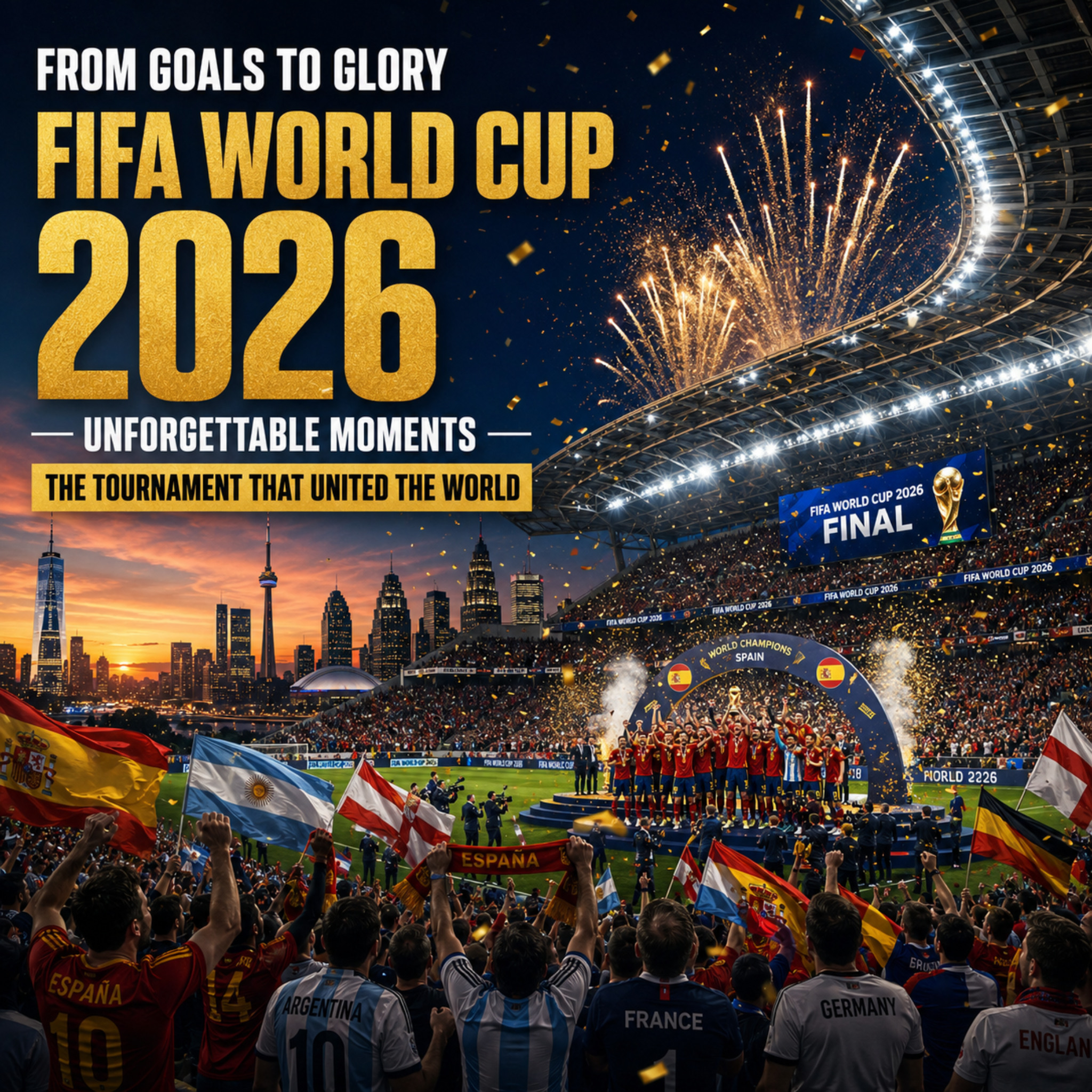
From Goals to Glory: Unforgettable FIFA World Cup 2026 Moments
The FIFA World Cup has always been more than a football tournament. It is where unforgettable moments are created, new stars emerge, and millions of fans around the world experience the same emotions at the same time. Every edition leaves behind stories that continue to be discussed long after the final whistle, and the 2026 tournament was no exception.
Hosted across the United States, Canada, and Mexico, the first-ever 48-team FIFA World Cup delivered everything football supporters hoped for. There were dramatic knockout matches, unexpected upsets, emotional farewells, record-breaking performances, packed stadiums, and celebrations that united fans across continents. The tournament proved that football remains one of the few events capable of bringing together different cultures, generations, and communities under one shared passion.
Spain's remarkable journey to lifting the trophy stood out as one of the defining stories of the competition. Their disciplined defending, patient build-up play, and ability to perform under pressure earned them a second FIFA World Cup title after a hard-fought victory over Argentina in the final. At the same time, individual brilliance from established superstars and rising talents ensured that every stage of the tournament had something memorable to offer.
Beyond the action on the pitch, World Cup 2026 also showcased football's growing global influence. Fan festivals attracted huge crowds, social media conversations reached record levels, celebrities filled the stands, and official merchandise became one of the biggest talking points throughout the month-long event. Music, entertainment, and football blended seamlessly, creating an atmosphere that extended far beyond the stadium gates.
Looking back, several moments defined the tournament more than others. Here are the stories, matches, and performances that made FIFA World Cup 2026 one of the most memorable editions in football history.
World Cup 2026: 10 Matches That Shook the World
Every football fan has a personal list of unforgettable matches. Rather than presenting an official ranking, the games below represent some of the tournament's biggest talking points based on their drama, quality, significance, and lasting impact.
1. Spain vs Argentina (Final)
The final in New York/New Jersey delivered exactly what fans expected from two football giants. Both teams defended brilliantly, creating very few clear chances during normal time. The breakthrough finally arrived in extra time when Ferran Torres scored the decisive goal, securing Spain's second FIFA World Cup title. It was a tactical battle where patience and discipline proved just as important as attacking quality.
2. Spain vs France (Semi-final)
Two of Europe's strongest sides produced a fascinating contest built on tactical discipline and technical excellence. Spain's organised defence frustrated France throughout the match, while their composed approach in possession demonstrated why they had been among the tournament's most consistent teams from the opening round.
3. Argentina vs England
Knockout football rarely disappoints when these nations meet, and this encounter lived up to expectations. Momentum shifted repeatedly as both teams created opportunities, but Argentina's resilience under pressure helped them secure another memorable victory on their route to the final.
4. Norway vs Italy
Norway's impressive campaign surprised many football followers, and their clash with Italy became one of the tournament's biggest stories. Strong defensive organisation combined with clinical finishing showed that emerging football nations are increasingly capable of challenging traditional powers.
5. France vs Brazil
Whenever France and Brazil share the same pitch, expectations are enormous. Their meeting once again delivered fast attacking football, outstanding individual performances, and moments of brilliance that reminded everyone why this rivalry remains one of international football's most respected contests.
6. Morocco vs Portugal
Morocco continued to strengthen its reputation as one of world football's fastest-rising teams. Their disciplined defensive display and tactical maturity against Portugal reflected the remarkable progress African football has made on the global stage.
7. Germany vs Netherlands
Historic rivalries always bring extra intensity, and this European showdown produced exactly that. Every challenge, every attack, and every tactical adjustment kept supporters fully engaged until the closing minutes.
8. Mexico vs USA
Co-hosts, regional rivals, and a packed stadium created one of the tournament's most electric atmospheres. The football matched the occasion, with both teams producing an entertaining contest backed by passionate support throughout the ninety minutes.
9. Japan vs Uruguay
This fixture highlighted the increasing competitiveness of international football. Japan's technical quality combined with Uruguay's experience resulted in an evenly balanced match that showcased tactical intelligence from both sides.
10. Cape Verde vs Spain
One of the tournament's biggest underdog stories came through Cape Verde's fearless performance against eventual champions Spain. Although Spain progressed, Cape Verde earned widespread admiration for their organisation, confidence, and willingness to compete against one of the world's strongest teams.
From Messi's Magic to Haaland's Power: The Golden Boot Showdown
One of the most talked-about storylines before the tournament began centred around football's biggest attacking stars. Fans eagerly followed the performances of Lionel Messi, Erling Haaland, Kylian Mbappé, and several other elite forwards, expecting an unforgettable race for the Golden Boot.
Messi once again demonstrated why he remains one of football's greatest players. His vision, passing range, and leadership continued to influence matches, while his ability to control the tempo reminded supporters that experience can be just as valuable as pace.
Haaland brought a completely different style. His physical strength, intelligent movement inside the penalty area, and finishing ability constantly challenged defenders. Even in tightly contested matches, he remained one of the tournament's most dangerous goalscorers.
However, the Golden Boot race ultimately belonged to Kylian Mbappé, whose consistency in front of goal separated him from the rest of the field. His pace, composure, and clinical finishing helped France remain among the tournament's strongest attacking teams while earning him the competition's top individual scoring honour.
Although only one player could finish as the tournament's leading scorer, the competition between football's biggest names became one of the defining themes of World Cup 2026. Every knockout round added another chapter to that story, giving supporters memorable individual moments alongside the drama of the team competition.
Spain vs Argentina: The Shock Path to Glory
Spain entered the tournament with high expectations, but their route to the trophy was anything but straightforward. Every knockout round demanded discipline, tactical flexibility, and mental resilience against some of the world's strongest national teams.
Rather than relying on individual brilliance alone, Spain succeeded through collective teamwork. Their midfield controlled possession with remarkable consistency, while the defensive unit remained organised under sustained pressure. Throughout the tournament, Spain conceded just one goal, highlighting the balance that existed between attack and defence.
The final reflected the strengths of both teams. Chances were limited, every tackle carried significance, and neither side was willing to make costly mistakes. After ninety tense minutes without a breakthrough, extra time finally produced the decisive moment when Ferran Torres found the net in the 106th minute.
That single goal secured Spain's second FIFA World Cup title and completed a campaign built on consistency rather than spectacle. Instead of dominating through high-scoring victories, Spain demonstrated that organisation, patience, and intelligent decision-making remain just as valuable in modern football as attacking flair.
For many football analysts, Spain's triumph represented more than another championship. It showed that a balanced squad, tactical discipline, and collective responsibility can still overcome even the most talented individual players on the biggest stage in world football.
Fans Went Wild: Celebrations Across Continents
One of the most memorable aspects of FIFA World Cup 2026 wasn't limited to the matches themselves—it was the way supporters celebrated every goal, victory, and unforgettable moment across the globe.
From Madrid and Buenos Aires to New York, Mexico City, Tokyo, Lagos, and Dubai, public viewing areas were filled with fans wearing their national colours. Whether supporting traditional football powerhouses or first-time qualifiers, millions embraced the tournament with remarkable passion.
Host cities created lively fan festivals featuring live entertainment, cultural performances, interactive football activities, and giant screens that allowed thousands of supporters to experience every match together. The atmosphere extended far beyond stadiums, turning city centres into vibrant meeting places where football became a shared celebration.
Social media further amplified the excitement. Match-winning goals, emotional celebrations, tactical debates, and unforgettable reactions quickly became trending topics worldwide. Fans who had never met connected through football, proving once again that the World Cup remains one of the few sporting events capable of bringing people together across cultures and languages.
For many supporters, the tournament wasn't only about lifting a trophy. It was about creating memories with family and friends, celebrating national pride, and experiencing football's unique ability to unite millions around a common passion.
Shakira, Katy Perry & the Soundtrack of the Cup
Football and music have always shared a special connection, and FIFA World Cup 2026 continued that tradition with performances that brought additional excitement to the tournament.
The opening ceremony in the United States featured a star-studded entertainment lineup led by Katy Perry, alongside internationally recognised artists who helped launch the competition in spectacular fashion. The performance reflected the tournament's global identity while welcoming supporters from every corner of the world.
As the competition reached its conclusion, the Final introduced another historic moment—the first-ever FIFA World Cup Final Halftime Show. The performance combined football with world-class entertainment, giving supporters an experience unlike any previous World Cup.
One of the biggest highlights was Shakira's appearance alongside Burna Boy, where they performed the tournament's official anthem. Their performance quickly became one of the most discussed moments of the Final, generating widespread attention across television, digital platforms, and social media.
Beyond these headline performances, music remained an important part of the World Cup experience throughout the tournament. Fan festivals, opening celebrations, cultural events, and live concerts reflected the diversity of the three host nations while creating an atmosphere that extended well beyond the football itself.
The combination of sport and entertainment helped make World Cup 2026 an event that appealed not only to football supporters but also to audiences following the tournament's cultural celebrations.
World Cup 2026 in Numbers: Goals, Records, and Clean Sheets
The expanded tournament delivered impressive numbers that reflected both its scale and its global appeal.
Some of the standout statistics included:
- • 48 national teams competed for football's biggest prize.
- • The tournament was hosted across three countries—the United States, Canada, and Mexico.
- • More than 6.8 million spectators attended matches, setting a new FIFA World Cup attendance record.
- • Spain lifted their second FIFA World Cup trophy after defeating Argentina in the Final.
- • Spain conceded only one goal throughout the tournament, underlining one of the strongest defensive campaigns in World Cup history.
- • Kylian Mbappé finished as the tournament's Golden Boot winner.
- • Rodri received the Golden Ball after consistently influencing Spain's title-winning campaign.
- • Unai Simón claimed the Golden Glove following a series of outstanding performances between the posts.
- • Pau Cubarsí earned the Best Young Player award after an exceptional breakthrough tournament.
These achievements highlighted how the competition rewarded both individual brilliance and collective teamwork.
Fastest Goals, Longest Battles: Records That Stunned Us
Every World Cup creates moments that remain part of football history, and the 2026 edition was no different.
Several knockout fixtures required extraordinary levels of concentration, with teams battling deep into extra time before a winner emerged. Those matches tested physical endurance, tactical discipline, and mental resilience in equal measure.
The Final itself perfectly reflected that intensity. Spain and Argentina remained locked together throughout normal time before Ferran Torres finally broke the deadlock in the 106th minute. It was a goal that instantly became one of the defining images of the tournament.
The competition also showcased the increasing tactical balance in international football. Many traditional favourites were pushed to their limits by emerging nations, demonstrating that the overall quality of international competition continues to rise.
For football supporters, these weren't simply statistics. They represented moments of pressure, courage, determination, and composure that transformed ordinary matches into lasting memories.
Guardians of the Goal: Keepers Who Became Legends
Great tournaments are remembered for spectacular goals, but they are equally shaped by the goalkeepers who prevent them.
Throughout World Cup 2026, several goalkeepers produced performances that kept their teams alive during crucial moments.
Leading that group was Unai Simón, whose calm decision-making, confident distribution, and outstanding shot-stopping ability played a major role in Spain's championship-winning campaign. His consistency throughout the tournament earned him the Golden Glove, recognising him as the competition's best goalkeeper.
Beyond Spain, goalkeepers across the tournament repeatedly demonstrated how important the position has become in modern football. Today's elite keepers are expected not only to make saves but also to organise defensive lines, initiate attacks, and remain composed under relentless pressure.
Penalty shootouts, one-on-one situations, reflex saves, and commanding performances inside crowded penalty areas reminded supporters that championship-winning teams are often built upon dependable goalkeeping.
While attacking stars naturally attracted headlines, the tournament also reinforced an important football truth: trophies are rarely won without exceptional performances from the players wearing the gloves.
Memes That Made the Cup Unforgettable
Every FIFA World Cup creates iconic football moments, but in today's digital world, many unforgettable memories are born online. World Cup 2026 generated thousands of viral memes that became part of the tournament's identity.
Supporters reacted instantly to dramatic goals, emotional celebrations, unexpected refereeing decisions, passionate coaching reactions, and tense penalty shootouts. Within minutes of every major match, social media platforms were filled with creative edits, humorous captions, and fan-made graphics that spread across the globe.
Several players also became trending topics—not only because of their performances but because of their memorable expressions, goal celebrations, and emotional reactions after full-time. Fans embraced these moments with good humour, adding another layer of entertainment to the tournament.
While trophies define champions, memes captured the lighter side of football and reflected how modern fans experience the game beyond the ninety minutes.
Stars in the Stands: Celebrity Sightings at the World Cup
The FIFA World Cup has always attracted famous faces from sport, entertainment, business, and politics, and the 2026 edition continued that tradition.
Across the tournament, stadium cameras regularly captured internationally recognised actors, musicians, former football legends, athletes, and business leaders enjoying matches alongside thousands of supporters. Their presence highlighted football's global appeal and its ability to bring together people from every industry.
Despite the spotlight on famous guests, the true stars remained the players on the pitch and the supporters in the stands whose passion created the unforgettable atmosphere that defined the tournament.
The Collectibles Craze: Jerseys, Stickers & Fan Obsessions
Every World Cup creates traditions that continue long after the final whistle, and collecting official merchandise remains one of the biggest.
During World Cup 2026, supporters eagerly searched for official jerseys, limited-edition footballs, scarves, trading cards, sticker albums, commemorative pins, and other licensed collectibles. Many items sold out quickly as demand increased throughout the tournament.
For younger fans, completing sticker collections became a daily activity, while long-time collectors looked for rare editions that could become valuable keepsakes in the future.
Official team jerseys were equally popular. Shirts worn by tournament winners, Golden Boot contenders, and breakout young players quickly became some of the most sought-after products.
Beyond their commercial value, these collectibles represent personal memories. Years from now, a match ticket, scarf, or jersey will remind supporters exactly where they were when football delivered another unforgettable chapter in World Cup history.
Conclusion
FIFA World Cup 2026 demonstrated why football continues to be the world's most celebrated sport. Across three host nations, the tournament delivered unforgettable matches, remarkable individual performances, emotional victories, and moments that united millions of supporters around the globe.
Spain's journey to becoming world champions reflected the importance of teamwork, tactical discipline, and consistency under pressure. At the same time, players such as Kylian Mbappé, Rodri, Unai Simón, and Pau Cubarsí earned individual recognition for performances that helped shape the tournament.
Away from the pitch, fan festivals, record-breaking attendance, celebrity appearances, global music performances, and the first-ever FIFA World Cup Final Halftime Show added new dimensions to football's biggest event. The combination of sport, culture, entertainment, and technology created an experience that reached far beyond the stadiums.
As supporters look back on World Cup 2026, they will remember much more than the final score. They will remember dramatic knockout matches, unforgettable celebrations, iconic saves, passionate supporters, viral moments, and stories that will continue to inspire football fans for years to come.
The tournament once again proved that while trophies are lifted by one team, the memories belong to the entire football community.
Frequently Asked Questions
Spain won the FIFA World Cup 2026 after defeating Argentina 1–0 after extra time in the Final. Ferran Torres scored the decisive goal in the 106th minute.
France forward Kylian Mbappé finished as the tournament's leading goalscorer and received the Golden Boot award.
Spain midfielder Rodri won the Golden Ball after playing a key role in Spain's successful World Cup campaign.
The tournament featured 48 teams, was jointly hosted by the United States, Canada, and Mexico, attracted a record number of spectators, and introduced the first-ever FIFA World Cup Final Halftime Show.
Alongside outstanding matches, the tournament featured global fan celebrations, live music performances, celebrity appearances, viral social media moments, and strong worldwide engagement that made it one of the most talked-about World Cups in history.