Blog
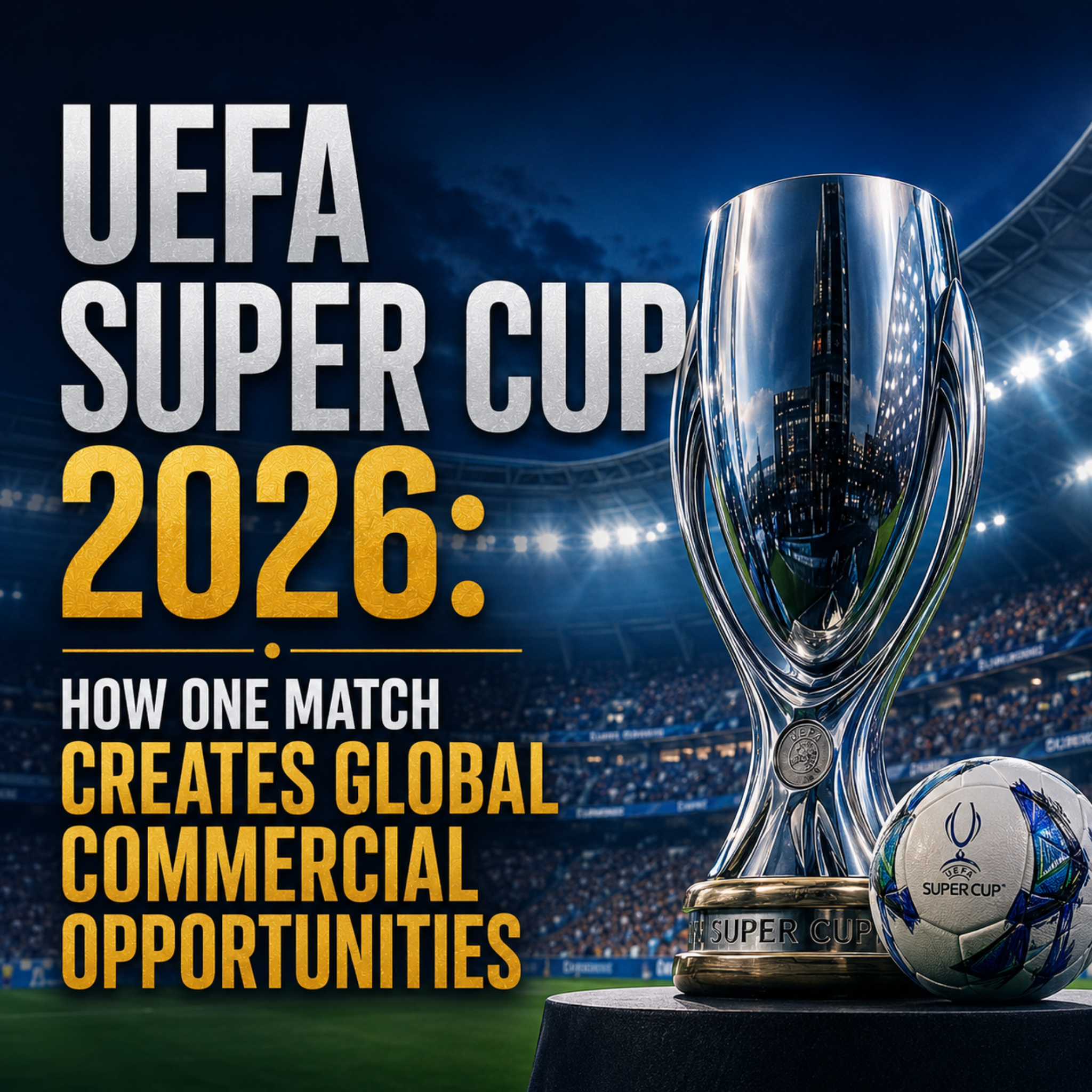
UEFA Super Cup 2026: How One Match Creates Global Commercial Opportunities
A football match may finish after 90 minutes, but the business opportunities around it can last much longer.
The UEFA Super Cup is a good example. It brings together the winners of Europe's two leading UEFA club competitions for one high-profile fixture. In 2026, Paris Saint-Germain met Aston Villa in Salzburg after winning the UEFA Champions League and UEFA Europa League respectively. Paris secured a 2–1 victory and retained the trophy.
For supporters, the occasion was about the match, the players and the silverware. For businesses, however, a major European football event represents something much wider.
It creates a concentrated platform where brands, sponsors, broadcasters, clubs, athletes, hospitality companies and fans all meet around the same sporting occasion.
That concentration of attention is what gives an event like the UEFA Super Cup its commercial appeal.
Why One Football Match Can Create So Much Business Activity
Major sporting events bring together several industries at the same time.
A football supporter may be thinking about the starting XI and the result. A sponsor may be thinking about brand exposure. A hospitality company may be focused on corporate guests. A tourism business may be looking at visitors arriving in the host city.
They are all connected to the same event.
That creates opportunities across areas such as:
- • Sports sponsorship
- • Advertising and brand activation
- • Hospitality
- • Tourism
- • Digital content
- • Media and broadcasting
- • Merchandise
- • Corporate networking
- • Athlete appearances
- • International partnerships
The UEFA Super Cup is therefore not simply a fixture on the football calendar. It is a short, high-attention commercial window.
The International Reach of European Football
One of the biggest advantages of European football is its international following.
The Super Cup benefits from this international interest.
For the 2026 edition, UEFA listed broadcast partners covering markets across Europe, the Americas, Asia and other regions. In the Indian subcontinent, for example, Sony was among the listed broadcast partners.
For sponsors, international distribution creates a valuable opportunity.
Instead of building awareness market by market, a brand connected to a major football event can communicate with audiences across several territories through one partnership.
That does not automatically guarantee business results, of course. The real value depends on how effectively the brand uses the exposure.
Sponsorship Is About More Than Putting a Logo on Screen
Football sponsorship used to be strongly associated with visible branding.
A company logo on a shirt, pitch-side board or television graphic remains valuable. But the expectations around sponsorship have changed.
Brands now have many more ways to activate a partnership.
A sponsor might create a digital campaign around the match, invite customers to a hospitality experience, work with players on social content or run a competition for supporters.
The match provides the attention. The activation gives that attention a commercial purpose.
This distinction matters.
A company can be visible during a football match and still struggle to create a meaningful connection with consumers. Another company may use the same event to tell a story, create an experience and give supporters something worth remembering.
The second approach has greater potential to turn visibility into engagement.
Fan Engagement Is Where Commercial Value Starts
Football has something many marketing campaigns struggle to create: emotional involvement.
Supporters already care about the clubs and players. They follow results, debate team selections, celebrate goals and share content with friends.
Brands can become part of that conversation when their involvement feels relevant.
Imagine a sponsor creating behind-the-scenes content with players before the match. Or a technology company developing an interactive match experience for supporters. A financial brand could invite business customers to a hospitality event connected to the fixture.
The commercial message is still present, but it is delivered through an experience.
That is increasingly important in sports marketing.
Fans do not necessarily object to sponsorship. What tends to matter is whether the sponsorship adds something to the experience or simply interrupts it.
Matchday Hospitality Can Open Business Doors
Not every commercial opportunity around football is aimed at the general public.
Major sporting events also bring together business leaders, investors, sponsors, clients and corporate partners.
Hospitality gives companies an opportunity to meet these audiences in a setting that is very different from a conventional business meeting.
A football match can provide the reason for people to come together. Conversations about partnerships, investments and future projects can happen around the event.
For businesses operating in international markets, this can be particularly useful.
A company may already have customers or partners in Europe and the Middle East, for example. Inviting them to a major sporting occasion can strengthen an existing relationship while creating opportunities for new conversations.
This is why premium sports hospitality is increasingly viewed as part of a wider commercial strategy rather than simply an upgraded match ticket.
The Host City Benefits Too
The commercial impact of a major football event is not limited to the teams and sponsors.
The host city can also benefit.
The 2026 UEFA Super Cup was held at Stadion Salzburg in Austria. UEFA described the 2026 event as the first UEFA club final to be staged at the venue.
When an international sporting event comes to a city, visitors need somewhere to stay, eat and travel. They may also spend money on entertainment and local experiences.
There is a wider branding benefit as well.
A successful international event can put a city in front of audiences who may never have considered visiting it before. For destinations competing for tourism, investment and international business, that exposure can have value beyond the event itself.
This explains why major sporting events are often viewed as part of a city's broader economic and tourism strategy.
Digital Content Gives the Event a Longer Life
The final whistle is no longer the end of the marketing cycle.
A single football match can produce a large amount of content before and after the game.
In the days leading up to the event, clubs and brands can publish interviews, training footage, player features and promotional campaigns.
On matchday, there are live updates, reactions, short videos and behind-the-scenes moments.
Afterwards, the story continues through highlights, interviews, photographs, celebrations and analysis.
This gives sponsors several opportunities to remain visible.
It also changes the economics of sports content.
The physical event may happen in one stadium on one evening, but digital platforms allow its commercial reach to continue across different markets for days or even weeks.
Athlete Partnerships Add Another Dimension
Footballers are not only competitors. Many are also powerful public figures with their own audiences.
A player can influence how supporters perceive a campaign because the message comes through someone they already follow and trust.
That makes athlete partnerships useful for brands looking to create more personal forms of communication.
However, athlete-led campaigns need careful planning.
The player's image should make sense for the brand. The message should feel believable. And the partnership should fit the athlete's professional identity.
When those elements align, a football event can become a starting point for a much larger athlete marketing campaign.
Why International Markets Matter to Sponsors
The global nature of football gives sponsors access to audiences they may otherwise find difficult to reach.
For a European brand, a major football event can help strengthen its presence in the Middle East. For a Middle Eastern business, a football partnership can provide a route towards greater international visibility.
This is particularly relevant to the UAE.
Dubai and the wider UAE have developed strong connections with international sports, business and investment communities. For UAE-based companies, involvement in international football can therefore support broader brand and networking objectives.
Potential opportunities can include:
- • International sponsorships
- • Club partnerships
- • Corporate hospitality
- • Athlete collaborations
- • Sports events
- • Digital campaigns
- • Business networking
- • Sports investment
The important part is having a clear reason for entering the partnership.
A brand should know which audience it wants to reach and what it wants that audience to do as a result.
Sports Investment Is Part of the Bigger Picture
Football's commercial ecosystem extends beyond sponsorship.
Major sporting events create visibility for businesses involved in technology, media, hospitality, athlete services, sports facilities and other areas.
This creates opportunities for investors who are interested in the broader sports economy.
A company does not necessarily need to own a football club to participate in the industry's growth.
It could provide a technology solution, manage athletes, develop sports infrastructure, create digital products or support sponsorship campaigns.
Looking at football through this wider business lens can reveal opportunities that are easy to miss when attention is limited to the match itself.
Measuring Whether a Partnership Actually Worked
High visibility can look impressive, but sponsors need more than impressive numbers.
A company should decide before the campaign begins what success will look like.
Depending on the partnership, relevant measures may include:
- • Brand awareness
- • Social media engagement
- • Website traffic
- • Content views
- • Customer enquiries
- • Lead generation
- • Hospitality attendance
- • Audience growth
- • Campaign interactions
There is no single metric that works for every sponsor.
A consumer brand might be primarily interested in awareness and engagement. A B2B company may care more about business leads and relationships developed through hospitality.
The important thing is to connect the sponsorship with a measurable business objective.
What the UEFA Super Cup Can Teach Sports Brands
The 2026 event offers a useful lesson for companies looking at sports marketing.
The biggest commercial opportunities do not necessarily come from buying the most visible advertising space.
They come from understanding what the event gives a brand the ability to do.
A successful partnership can help a company:
Reach: Put its brand in front of an international audience.
Engage: Give supporters a reason to interact.
Connect: Bring customers and business partners together.
Position: Associate the company with relevant sporting values.
Expand: Use football to enter or strengthen new markets.
That is a more useful way to look at sports sponsorship.
Why Strategy Matters in Sports Partnerships
The sports industry moves quickly. Major events attract attention from many competing brands, and simply participating does not guarantee meaningful results.
Companies need to think carefully about the type of partnership they want.
Questions worth asking include:
- • Who are we trying to reach?
- • Why does this football event matter to our audience?
- • What can we offer supporters?
- • How will the partnership strengthen our brand?
- • Which markets are most important?
- • How will we measure the outcome?
The answers help determine whether sponsorship is actually the right route.
They can also help a business avoid spending heavily on visibility without having a clear plan for converting that visibility into value.
The UAE's Role in the Growing Sports Business
The global sports industry is increasingly connected to the Middle East, and the UAE has an important role within that landscape.
Its international business environment makes the country relevant to sports organisations, brands, athletes and investors looking for regional opportunities.
For UAE businesses, this creates an interesting position.
They can look beyond domestic sports marketing and consider relationships with international clubs, athletes, leagues and sporting events.
At the same time, international sports organisations can look towards the UAE for commercial partnerships, investment opportunities and access to the wider Middle Eastern market.
This two-way relationship can create value for both sides when it is built around clear commercial objectives.
How SHM Supports the Sports Business Ecosystem
A successful sports partnership often involves several areas at once.
Branding influences how an organisation is presented. Marketing and PR shape communication. Sponsorship connects brands with sporting properties. Talent management supports athletes. Investment and consultation help businesses assess commercial opportunities.
SHM UAE operates across these areas through its services in Branding, Talent, Investments, Consultations, Athletes Health Care, Marketing & PR and Sports Sponsorship.
This integrated perspective is particularly relevant when a business wants to move beyond a one-time sports campaign and build a longer-term presence in the industry.
The objective is not simply to associate a company with a major football event.
It is to understand how that association can contribute to the company's wider brand, marketing and commercial goals.
One Match, Many Opportunities
The UEFA Super Cup 2026 ended with Paris Saint-Germain winning 2–1 against Aston Villa.
For football fans, that result is the headline.
For the sports business industry, the bigger story is what surrounds the match.
Broadcasters reached audiences across different markets. Sponsors gained opportunities to activate their brands. Hospitality brought businesses and clients together. Salzburg gained international attention. Players and clubs generated content that continued beyond the stadium.
All of those activities were connected to one fixture.
That is the commercial power of major sporting events.
A single match can create a meeting point for brands, audiences, athletes and businesses from different parts of the world. The organisations that approach these opportunities strategically can use them not just for short-term exposure, but for stronger relationships and longer-term growth.
As football continues to become more international and digitally connected, the value of sports partnerships will increasingly depend on what happens around the game—not only what happens on the pitch.
Frequently Asked Questions
The UEFA Super Cup brings together winners of major European club competitions and attracts international attention. This creates opportunities for sponsorship, hospitality, digital marketing, media exposure and business networking.
Brands can use football events to increase awareness, engage supporters, create content, host clients and strengthen relationships in international markets. The results depend on the quality and relevance of the activation.
Sports sponsorship activation refers to the activities a brand carries out around its sponsorship to engage its target audience. These activities can include digital campaigns, events, competitions, content and hospitality.
Yes. International football partnerships can provide UAE businesses with opportunities to reach overseas audiences, strengthen their brand and develop relationships with clubs, athletes and business communities.
Fan engagement gives brands an opportunity to communicate with an audience that already has a strong emotional connection with the sport. Relevant and well-planned campaigns can turn that attention into meaningful brand interaction.